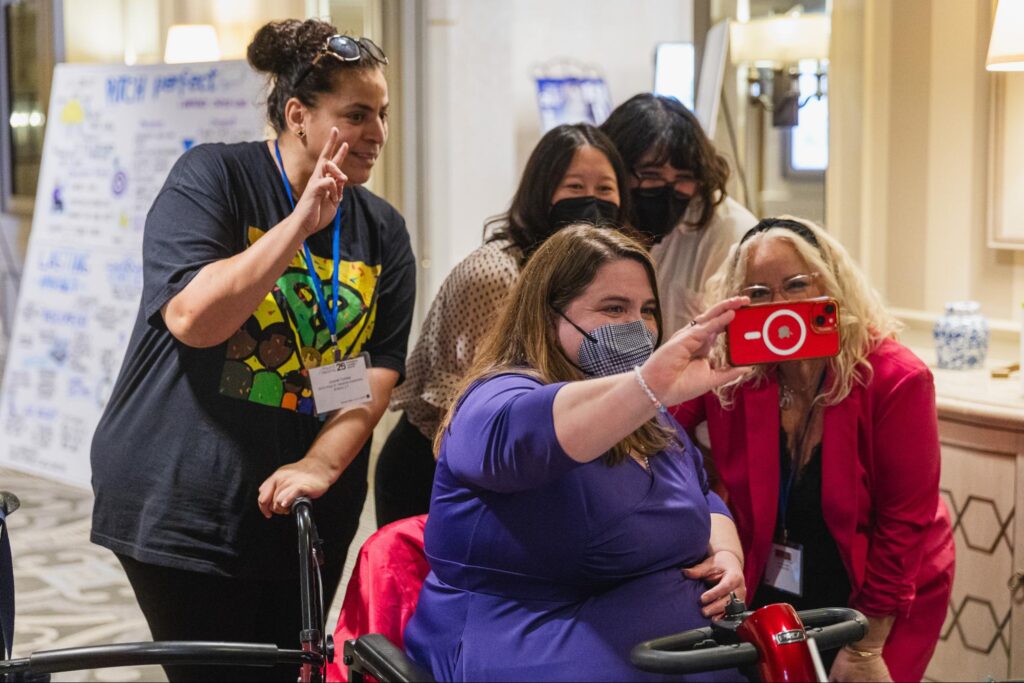
This year, AAPD marked 30 years of advancing disability rights and leadership under a theme that feels more urgent than ever: Powered by Community.
Our founders, Paul G. Hearne and John Kemp, imagined AAPD decades ago as an organization where disabled people could come together to shape policy, build power, and foster community. Thirty years later, that vision continues to guide us.
In 2025, the disability community faced extraordinary challenges. We saw renewed threats to services disabled people rely on for our safety, dignity, and survival. Inclusive education, accessible employment, affordable housing, and health care were all under attack. Through it all, AAPD not only worked to mitigate these threats, but we also brought partners together to coordinate across community priorities, supported the development of disability organizing infrastructure, and lift up advocates engaged in the fight for disability rights.
I am deeply proud of what our team and our community accomplished together this year. Here are some of my highlights from AAPD’s work in 2025:
How We Shaped Disability Policy
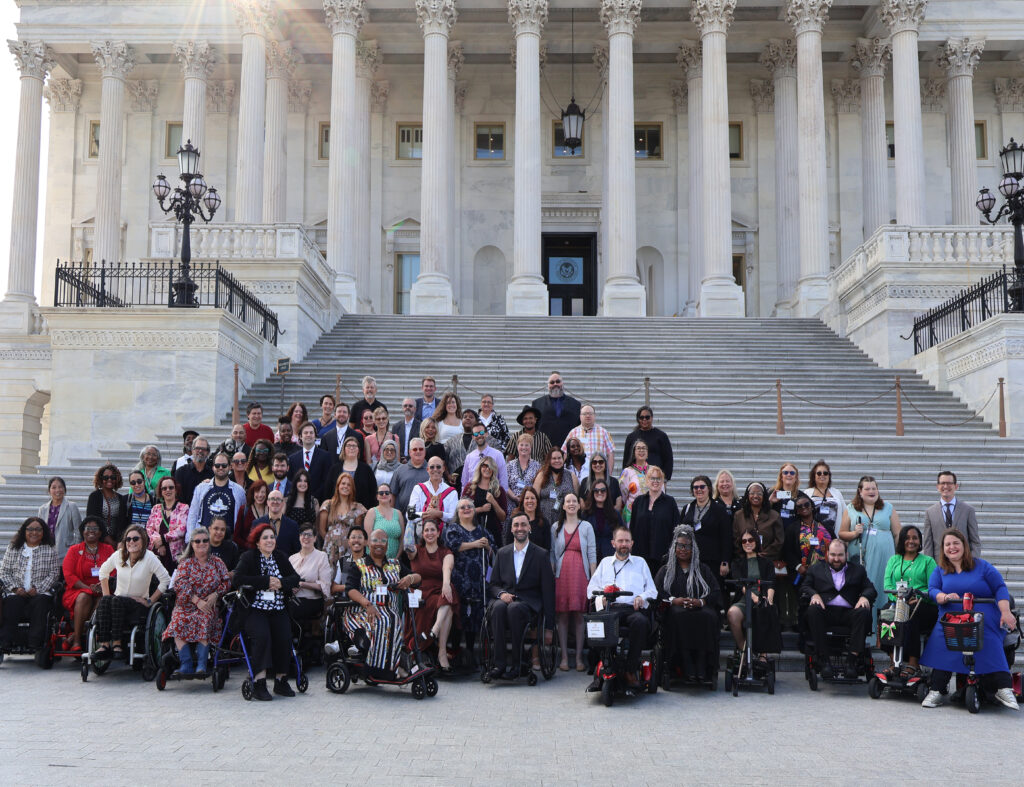
AAPD’s policy work is rooted in the principle of nothing about us without us, ensuring that disabled people are at the center of decisions that affect our lives. In 2025, we helped to organize rallies and vigils in response to proposed Medicaid cuts and helped demonstrate that disability policy is a bipartisan issue. During our Disability Power on the Hill event in September, AAPD supported nearly 120 disabled advocates from 33 states by covering travel and lodging so they could participate fully. Together, advocates held meetings with 126 members of Congress in both Republican and Democratic offices. The advocates focused on gaining more support for the SSI Savings Penalty Elimination Act and Transformation to Competitive Integrated Employment Act, preserving the Individuals with Disabilities Education Act, and securing appropriations funding for programs disabled people rely on.
Not only did Hill Day lead to critical members of Congress signing onto the target bills, but it also formed a community of disability advocates who keep in touch to this day. This experience was meaningful for many participants because it was their first time ever advocating in-person in Washington, D.C and being in the halls of Congress. Disabled people belong everywhere decisions are being made, and Disability Power on the Hill serves as one example of how AAPD creates leadership experiences for disabled people that directly lead to real policy impact.
2025 was a year of often rapid and unpredictable policy changes that created confusion and fear, especially for disabled people and our families. In order to shape policy, people have to be able to understand it. To meet the needs of our community, AAPD expanded the ways in which we communicate about policy. We published a series of explainers to ensure disabled people and our allies can keep track of what is moving, changing, and unfolding on Capitol Hill and across the federal government and further understand how these changes impact the disability community. Related to this goal of increased understandability of our materials, we have started and will continue to incorporate more plain language into our materials to make our work more accessible.
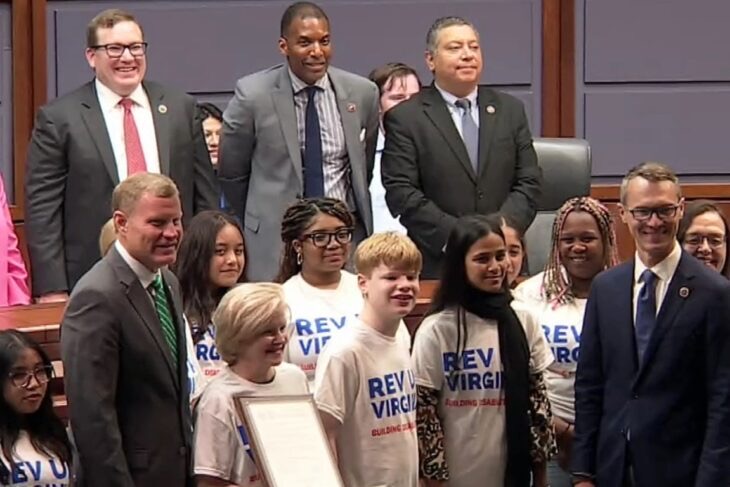
AAPD also heavily supported on-the-ground organizing by disabled leaders working in their own communities. Through our REV UP disability voting campaign, we distributed close to $250,000 in grants to organizers in 23 states to strengthen disability voter engagement. These grants supported conducting polling place accessibility audits, providing accessible voting information and outreach in American Sign Language, engaging in nonpartisan ballot education, and more. State REV UP coalitions planned a variety of activities to shape a more accessible democracy. To name a few highlights, REV UP Virginia hosted a statewide candidate forum on disability and REV UP Texas registered and engaged nearly 700 voters, reaching disabled voters on college campuses, community events, and nursing homes. In 2025, REV UP also focused on making sure all voters could access our materials. During Disability Voting Rights Week, REV UP provided resources in eight languages, including American Sign Language. Nationally, REV UP reached almost 30,000 voters by helping them register to vote, request an absentee ballot, update their address, or obtain nonpartisan voter education.
Beyond our REV UP grant programs, we also provided grants to support the disability community in moments of urgent need. In response to the federal government shutdown, the Fannie Lou Hamer Leadership Program launched a Rapid Response Hunger Relief microgrant initiative. These grants supported 33 food distribution events and 10 education sessions across 14 states, reaching more than 2,100 individuals and families through meal programs, mutual aid, SNAP navigation, and transportation support.
We also continued to expand our Information and Referral (I&R) services, providing individualized support to disabled people seeking accessible housing, equitable education, career and internship opportunities, and many other supportive resources. Since January, we have responded to close to 5,000 emails and phone calls from people seeking direct support related to — everything from accessible, affordable housing to legal representation and more. Although AAPD is not a direct service organization, getting connected to the right local resource can be a daunting task in and of itself. If this year has taught us anything, it is that our state and local disability community infrastructure is more important than ever.
How We Built Disability Power and Community
Community building is not separate from policy work; it is how lasting change happens. Power and community building happens across all of AAPD’s work. Whether it is through creating opportunities to increase disabled people’s economic power or cultivating disabled leaders across the country, AAPD used our advocacy and our programmatic work to build disabled people’s power in 2025.
As we have done for more than two decades, we continued to invest in programs that develop disabled leaders and strengthen economic opportunity. This year, we released a comprehensive evaluation of the first 20 years of our Summer Internship Program. The findings were powerful and significant. Internship alumni experience economic mobility that outpaces national norms. Evaluations from our most recent internship cohorts demonstrate the benefits interns experience as a result of participating in the program. 100 percent of 2025 summer and fall interns reported that the program was valuable for their career development and that they felt a strong sense of belonging within the disability community. Demand for our internship program has never been higher, and we hope the information and lessons contained within the internship evaluation report can be applied to other programs seeking to improve career, leadership, and community development experiences for youth with disabilities.
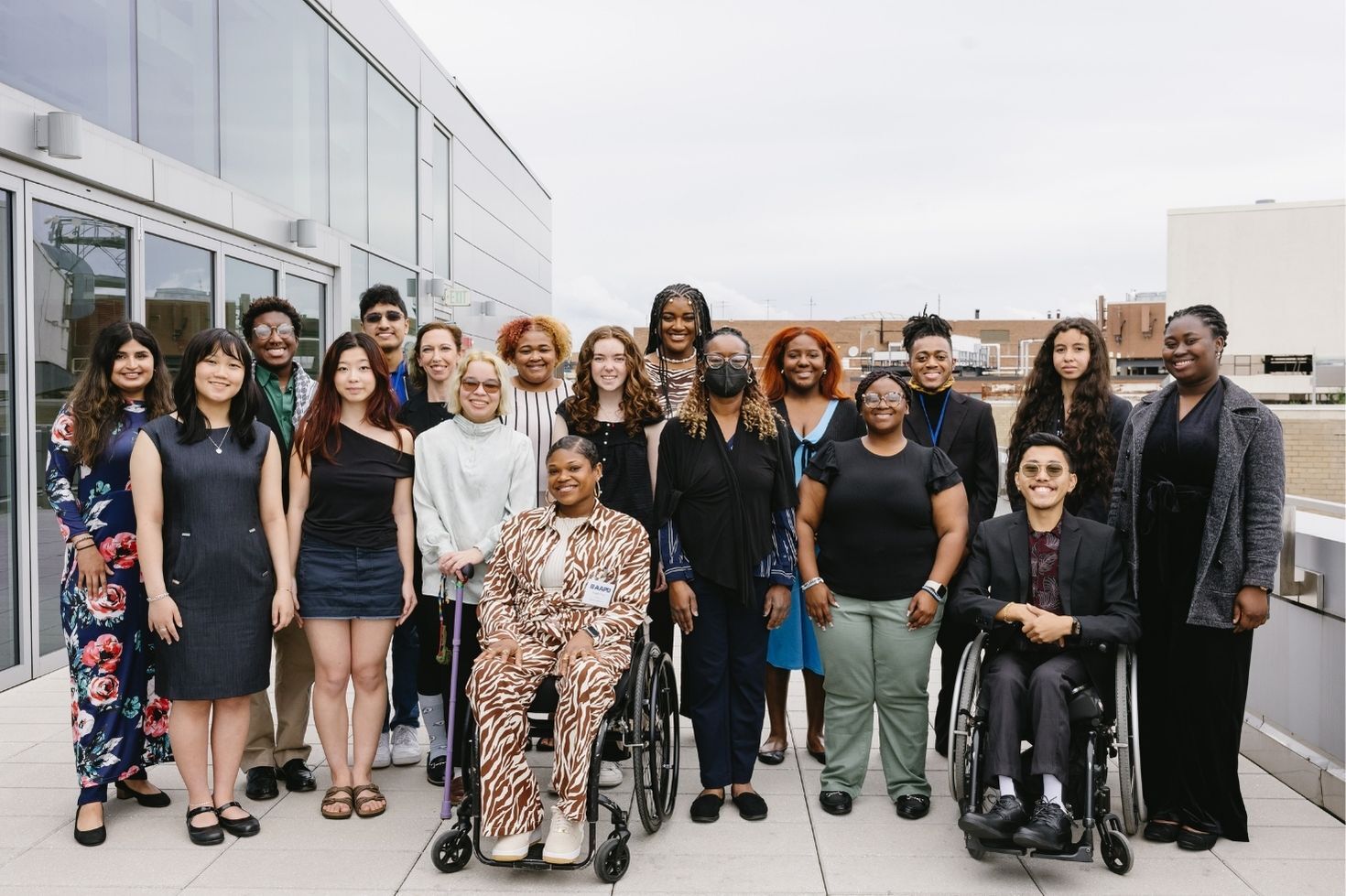
We also strengthened our commitment to emerging leaders by increasing the Paul G. Hearne Emerging Leaders Award from $10,000 to $25,000 per recipient, enabling awardees to turn bold ideas into lasting change. While this increase in award is significant, it pales in comparison to the movement contributions of these leaders. For example, Sneha Dave, a Hearne Awardee from 2020, facilitated 6 roundtables on young adults with chronic medical conditions on clinical trials and young adults this year, creating an opportunity for disabled voices and experiences to be shared in spaces that often explicitly exclude us. Of course, I cannot think about the lasting movement contributions of Hearne Awardees without mentioning Alice Wong, who we lost this year. Alice’s Disability Visibility Project was supported by AAPD’s Hearne Award in 2016 and grew into an essential platform for creating, sharing, and amplifying disability media and culture. Her work made and continues to make complex disabled experiences visible to the world. This year we commemorated the 25th anniversary of the Hearne Awards by convening former Hearne Awardees from 2000 all the way to 2025.
This year, AAPD also launched the Access Coalition: Creating More Inclusive Retail Spaces. Through this coalition, AAPD joined with partners like Walmart, Sam’s Club, Starbucks, Step ‘n Wash, Locknet, Inclusive Web, and CVS to create retail accessibility frameworks that integrate human-centered design and constant feedback from people with lived experience.
This work has underscored that small changes — whether in signage, fixtures, or layouts — can make a meaningful difference in the ability of disabled people to experience greater dignity within our larger communities.
Our work to promote greater accessibility and dignity for disabled people was not limited to physical retail spaces. AAPD also engaged in work to ensure that people with disabilities are centered in the creation, deployment, governance and auditing of technologies that we rely on. One example of this work is the Anthem award- winning report we authored with the Center for Democracy and Technology titled Building A Disability-Inclusive AI Ecosystem: A Cross-Disability, Cross-Systems Analysis Of Best Practices. The report provides recommendations for assuring that disabled people can enjoy the benefits of AI and algorithmic technologies while being safeguarded from the risks.
Across AAPD’s work, one lesson is clear: when disabled people lead initiatives on issues that directly impact our lives, the results are powerful. From visionary leadership supported by the Paul G. Hearne Emerging Leaders Award to grassroots organizing through REV UP, disabled-led solutions are what move our movement forward and ensure that disabled people can thrive.
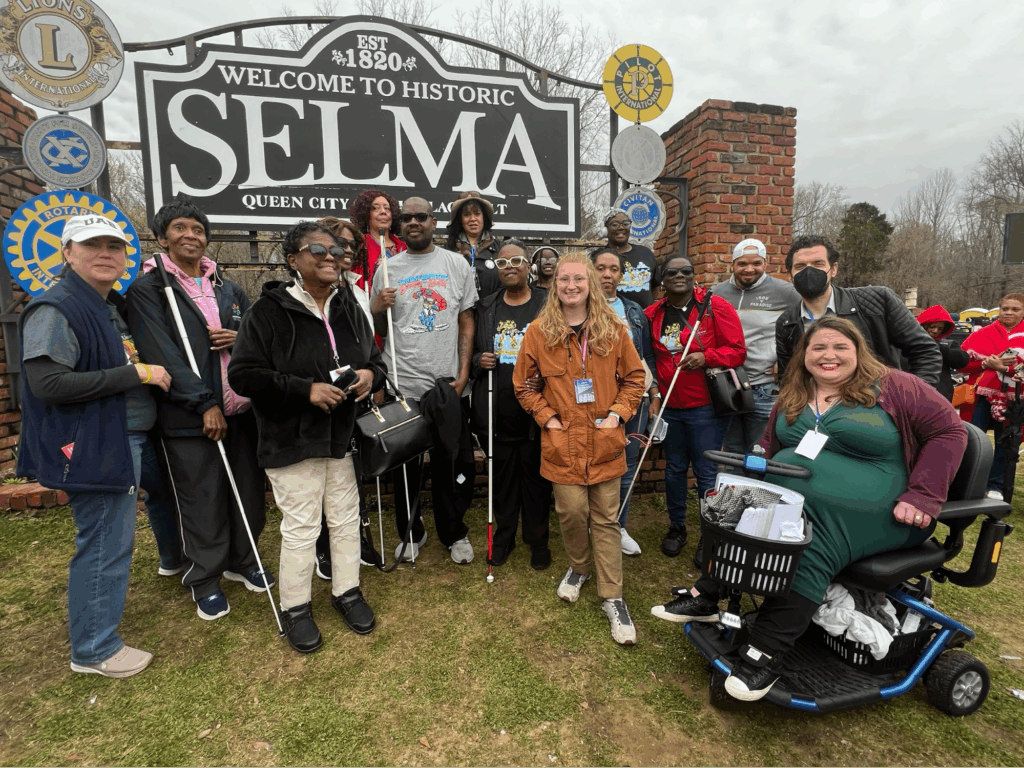
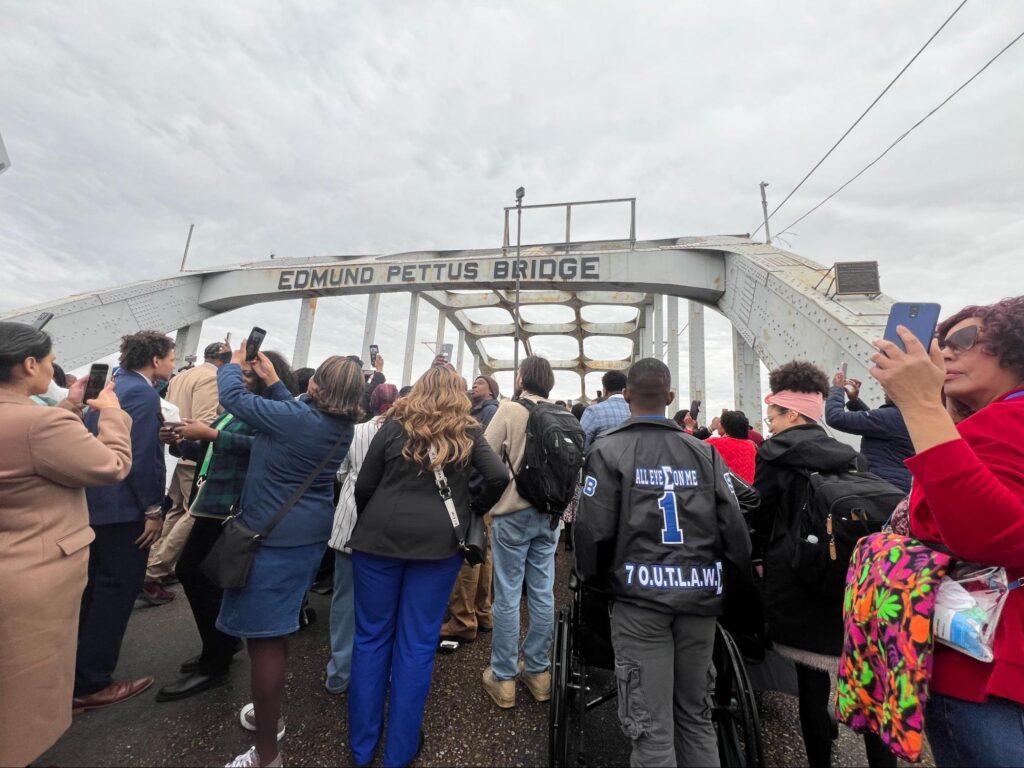
The work I’ve described above is only a snippet of what AAPD’s dedicated team and our partners accomplished in 2025. Reflecting on the year as a whole, one of the moments I’ve continued to return to was traveling with the REV UP team to Alabama, for the 60th anniversary Selma Jubilee and the Edmund Pettus Bridge crossing commemorating Bloody Sunday. Bloody Sunday was a pivotal moment in the fight for voting rights and the passage of the Voting Rights Act of 1965. Every year since, advocates return to cross the bridge alongside the original demonstrators, called foot soldiers. During this year’s march, AAPD supported disabled marchers by providing wheelchairs, sighted guides, and transportation assistance, and we organized a group of 25 disabled advocates to cross the bridge together alongside original foot soldiers. By now, the foot soldiers have aged into disability, and many used the wheelchairs we provided to cross. The consistent presence of these foot soldiers over the past 60 years, witnessing the many shifts in civil rights over that time, reminds me of the Martin Luther King Jr. quote, “The arc of the moral universe is long, but it bends towards justice.” It also reminds me that no matter how policy changes, no matter what economic opportunity exists, community will sustain us.
How You Can Be Part of Our Community
AAPD’s work is powered by community.
Whether you joined us on Capitol Hill, organized locally through REV UP, participated in a leadership program, or supported our work from your home, you are part of this movement. Your engagement and generosity sustain the programs and policy advocacy that help us expand opportunity and advance disability rights.
As we look to 2026, our priorities include strengthening disability voter education ahead of the midterm elections, expanding plain language access, and continuing to build political and economic power across the disability community. We will adapt to changing times to take on emerging disability issues from AI to autonomous vehicles. We will also continue investing in people with disabilities through our internships, scholarships, and awards programs.
Our policy advocacy and power building programs require support from our community. If you are able, I invite you to make a contribution today to support our important work. You can donate by visiting aapd.com/give, where your gift helps ensure that AAPD can continue to show up, build together, and grow our impact in the year ahead.
There are many opportunities to get involved with AAPD’s work beyond donating. You can sign up for AAPD’s email list, follow us on social media, sign up to be a DMD mentor, get engaged with REV UP, and more.
AAPD’s progress belongs to all of us. Thank you for everything you have contributed, including your time, your voice, your partnership, and your belief in what we can build together in 2026 and beyond.