
For Immediate Release: December 28, 2025
Contact: Jess Davidson, jdavidson@aapd.com
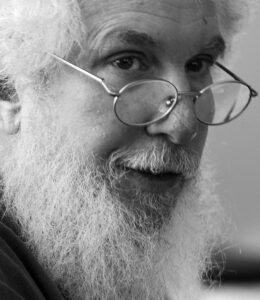
WASHINGTON, D.C. – On Friday, December 26, 2025, our movement lost a powerful leader, and many of us lost a dear colleague and friend. Bob Kafka, a longtime organizer with the disability civil rights protest group, ADAPT, the founder of AAPD’s REV UP campaign, and a co-lead of REV UP Texas, passed away at his home in Austin, Texas.
Bob was driven by the conviction that disabled people deserve freedom, choice, dignity, and power. His ideals were not just dreams; they were a mandate, a directive that guided how he lived his life. He carried his conviction with a steady, patient, laid-back confidence. He believed there was always work to be done, but he also believed in making time for banter and jokes, time to educate and mentor people new to the movement.
Bob was a unique and dynamic leader in that he didn’t play just one role in the disability rights movement – he played them all. He understood the value of different tactics and the power of community.
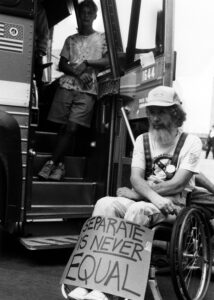
Bob protesting for transit access
He put his body on the line for justice – Bob was arrested over 30 times as part of the his many fights to pass landmark pieces of legislation and to protect and establish critical programs. The legislative causes for which he put his body on the line for were often eventually successful, resulting in lifts on buses and increased funding and incentives for home-and community-based services (HCBS).

One of Bob’s many arrests while fighting for disability civil rights
Bob’s unruly white curls (usually tucked beneath a hat) and wild beard can be spotted in the photos of the crowds at many pivotal disability protests that helped propel public awareness and progress on key issues. He could lead a chant and rally a crowd – “Our homes, not nursing homes!” – and then moments later lower his voice, lean back in his manual wheelchair and, with patience and tact, have a diplomatic debate with elected officials and political appointees over the nuances of federal funding, state-led programs, and managed care.

Bob speaking at an ADAPT protest
Bob attended his first ADAPT training in 1984 and remained a student of advocacy until the end of his life. He interviewed hundreds of disabled leaders on his KSFR 101.1 Santa Fe radio show, Barrier Free Futures. While many of his guests tried to turn the script and interview the movement giant on the other side of the mic, Bob was a curious and thoughtful host. He knew that listening was an important part of leading.
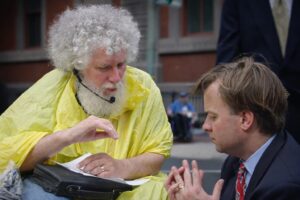
Bob negotiating with Mark McClellan, head of the agency that ran Medicaid and Medicare under the Bush administration, at a protest for HCBS outside the White House
“Bob was brilliant. There was no disability policy issue I couldn’t ask him about. Part of that was that he read a lot, but part of it was he made it a point to get to know people, ask them questions, and listen to them,” said Lydia Nuñez Landry, a leader of REV UP Texas, who advocated alongside Bob.
No task was below Bob, and no win was too small. He recognized equal and necessary value in freeing one person from a nursing home and in working toward systemic change. He enjoyed meeting with legislators as much as he enjoyed organizing community parties all around Texas for Disability Voting Rights Week.

“Bob hardly ever talked about himself, in a lot of ways he was really selfless. The last action we went to together, his chair was falling apart, held together with tape and zip ties. The money he received was all going toward the cause. That’s something I really respected and admired,” shared Nuñez Landry.
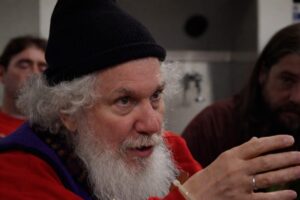
Bob recognized the importance of honoring and growing disabled peoples’ civic power, and fostered this passion by founding REV UP Texas. Ten years ago, we were honored when Bob asked AAPD to take the movement national — a movement he started — by establishing and managing disability vote coalitions in many more states. REV UP is an acronym, of course, but also a call to action: Register, Educate, Vote, Use your Power! It is national in scope, recognizing that broad change is needed to move the needle, but it is driven by local, grassroots advocacy, with coalitions in over 20 states and engagement across 48 states.

Bob with REV UP Texas coalition members
Bob understood that voting is a singular, individual action that connects people to larger movements. For this reason, REV UP recognizes that every person has a role to play in creating change and that all disabled people have immense power. It asserts that we belong in political conversations and we deserve to be seen, heard, and respected. Most importantly, REV UP recognizes that the disability vote is formidable with the power to shape and change the course of our nation’s history with 40.2 million disabled voters in the U.S. and over 70 million when you count caregivers and family members.

Bob and coalition members at a Disability Voting Rights Week celebration in 2023 in Austin, TX
Despite having witnessed both tremendous policy gains and heartbreaking setbacks over his lifetime in activism, Bob was relentless in his belief in a better future and putting in the work to get us there.
“To be an organizer, you have to believe that change is possible, but you also have to be pragmatic and realistic. You have to be specific about what policy changes you want, and Bob was great at that,” Nuñez Landry said. “I never saw him despair or give up. He always would tell me when I would get down, in his Brooklyn accent, ‘You can’t motivate people with despair and hopelessness, Lydia. You have to make them believe change is possible and can be done.’”
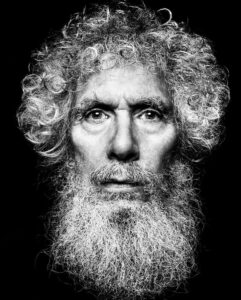
Bob’s portrait from the Civil and Human Rights Museum
Bob was famous for ending every email and phone call with his relentless refrain for justice, “Don’t mourn, organize.” Every setback in the long arc to justice, every loss of a disability hero and community member, is part of our story.
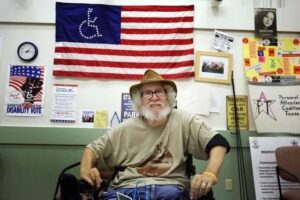
Bob in front of the ADAPT flag and a REV UP poster
In the spirit of Bob’s mantra, we will not dwell in our grief but use it to fuel our commitment to disability organizing, dignity, and power. You can stay engaged with REV UP by joining our listserv or attending state and national calls. If you’re interested in starting a coalition or getting further engaged, email revup@aapd.com.
Thank you, Bob. We won’t let you down.
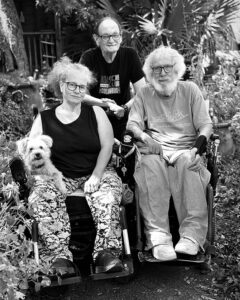
Bob with his wife Stephanie and Tom Olin